
The Bargaining Process at Work: A Visual
How does bargaining for 14,000 educators work?
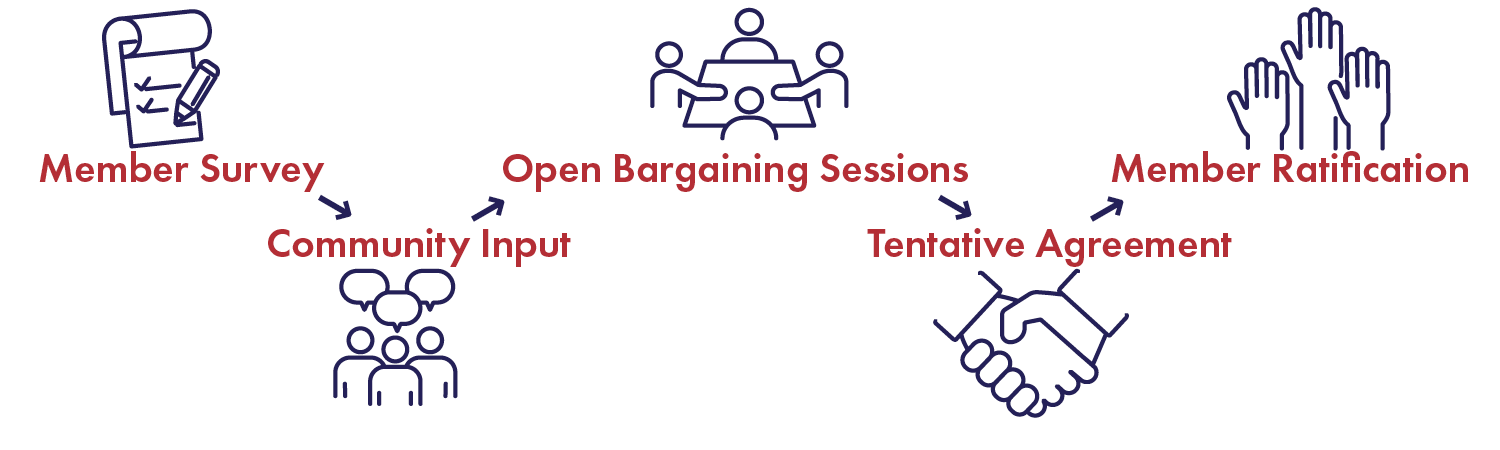
Bargaining for 14,000 educators is a collective process in which members shape priorities, a bargaining team negotiates at the table, and educators remain engaged throughout negotiations.
A designated bargaining team negotiates directly with the employer, Montgomery County Public Schools (MCPS), on behalf of the Montgomery County Education Association (MCEA). At the same time, MCEA is committed to open bargaining, meaning that members are welcome to attend bargaining sessions as observers, stay informed about negotiations, and remain involved as the process moves forward.
This structure ensures negotiations are both effective and transparent, keeping decisions at the table grounded in the lived experiences of educators across the county.
How do priorities shape bargaining?
Bargaining begins with a member bargaining survey, which is sent to all MCEA members before negotiations start. The survey helps identify member priorities and guides the development of bargaining proposals.
MCEA also engages in bargaining for the common good by intentionally seeking input from community partners as well as individual community members who have signed in at MCEA’s table during events. Through community questionnaires and conversations, MCEA gathers perspectives on issues that affect educator working conditions, student learning conditions, and the overall health and strength of school communities.
Who is on the bargaining team?
The bargaining team is composed of appointed MCEA members who volunteer their time, expertise, and commitment to represent their colleagues at the bargaining table. Team members dedicate significant time outside the duty day, including after school, on weekends, and during breaks, to participate in bargaining sessions, internal caucus meetings, and engagement with members. Their responsibility is to negotiate thoughtfully and strategically in alignment with the priorities expressed by members.
When does bargaining begin?
Bargaining begins once both MCEA and MCPS have established bargaining teams, appointed their chief negotiators, and agreed to ground rules and a meeting schedule. The parties engage in a series of bargaining sessions until a tentative agreement is reached and presented to members for ratification.
Can MCEA members attend bargaining sessions?
Yes. Any dues-paying MCEA member may attend open bargaining sessions as an observer. Member presence at open bargaining sessions is an active part of the process and reinforces collective engagement and participation among educators across the county.
What guides MCEA’s approach to bargaining?
By centering member voice, practicing open bargaining, and engaging community partners, MCEA’s bargaining process is guided by a shared commitment to strong schools, sustainable working conditions, and the well-being of students, educators, and families across Montgomery County.